
From the Etruscans
to the Romans
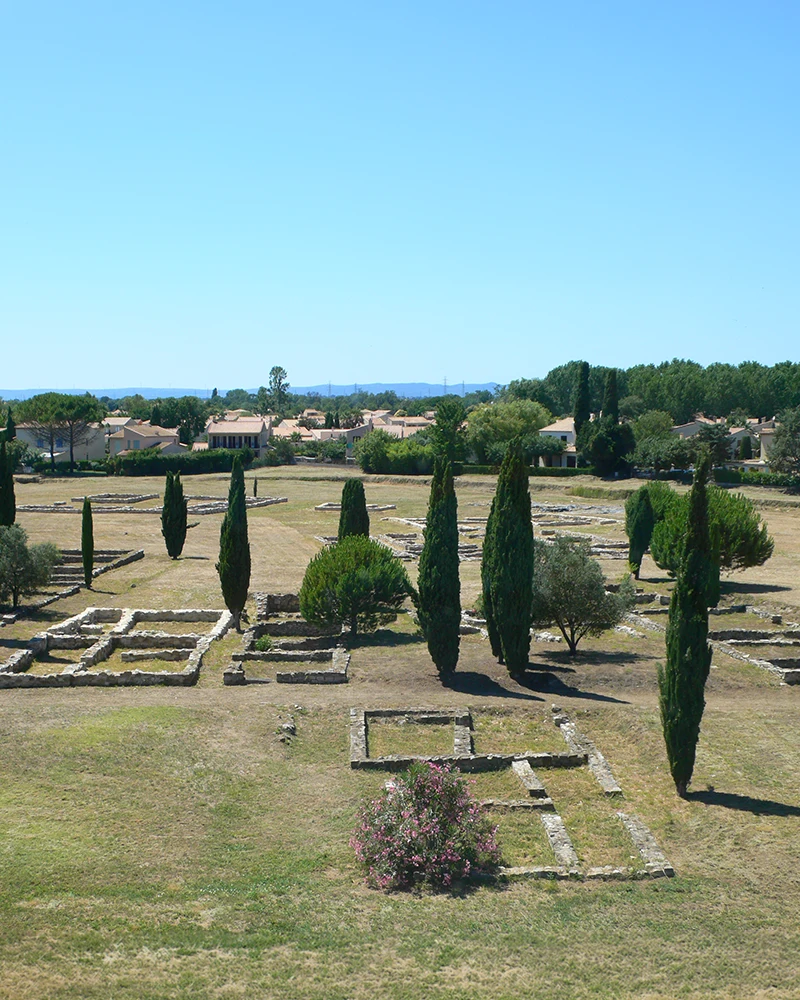
The tradition of wine-growing in ‘les Grés de Montpellier’ traces its origins to the Etruscan era in 500 BC, demonstrated by the Lattara archaeological site near Montpellier. Here, archaeologists discovered an ancient wine press that still had preserved traces of grape seeds.
The vineyards of this era described a veritable ancient travel route, traversed from east to west by the "Via Domitia", which was dotted along the way with oppidums (fortified Iron Age sites), such as the Ambrussum site in Lunel. It was along this route that the Romans developed the cultivation of grapes as well as their wine trade.
Benedictine rule and the imprint of the Cistercian monks
In 782, Witiza, born in Sextantio (Castelnau-le-Lez) and better known as Saint-Benoît, son of the count of Maguelonne, renewed the rule of the Benedictines, introducing the obligation to plant grapevines.
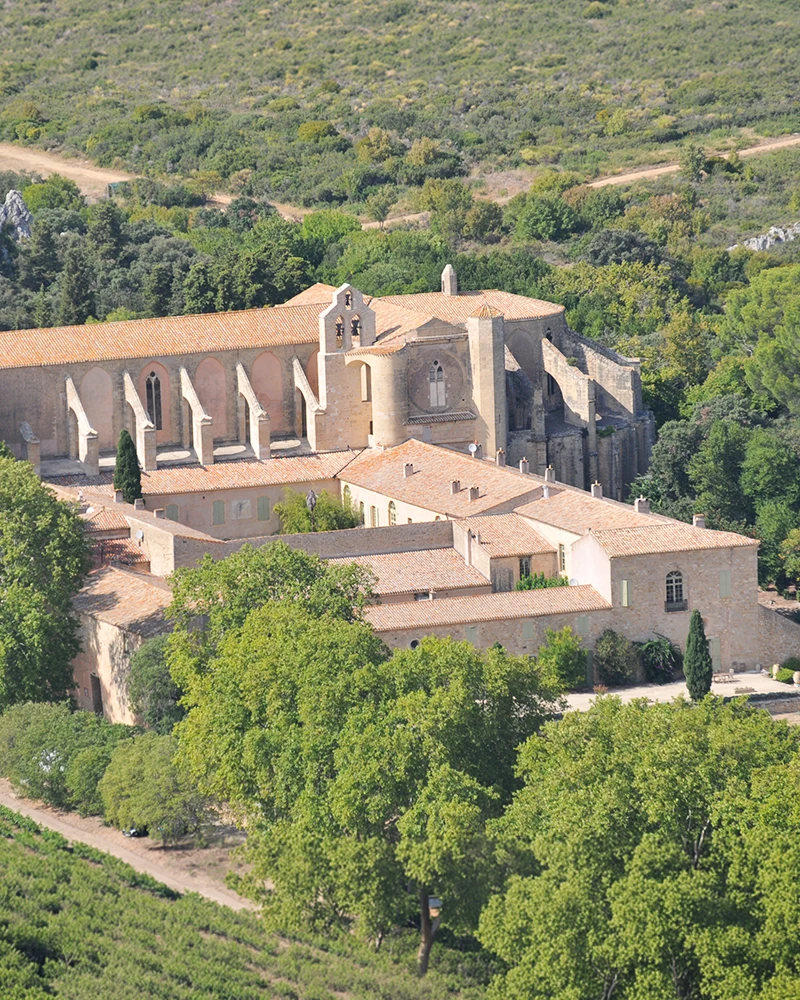
Later, the Order of the Cistercians founded, in 1138, a network of abbeys, including the abbey of Valmagne. These abbeys were endowed with vineyards based on the Morrastel grape, a variety which, after having disappeared, is beginning to re-emerge in the vineyards of today.
From modern times
to today
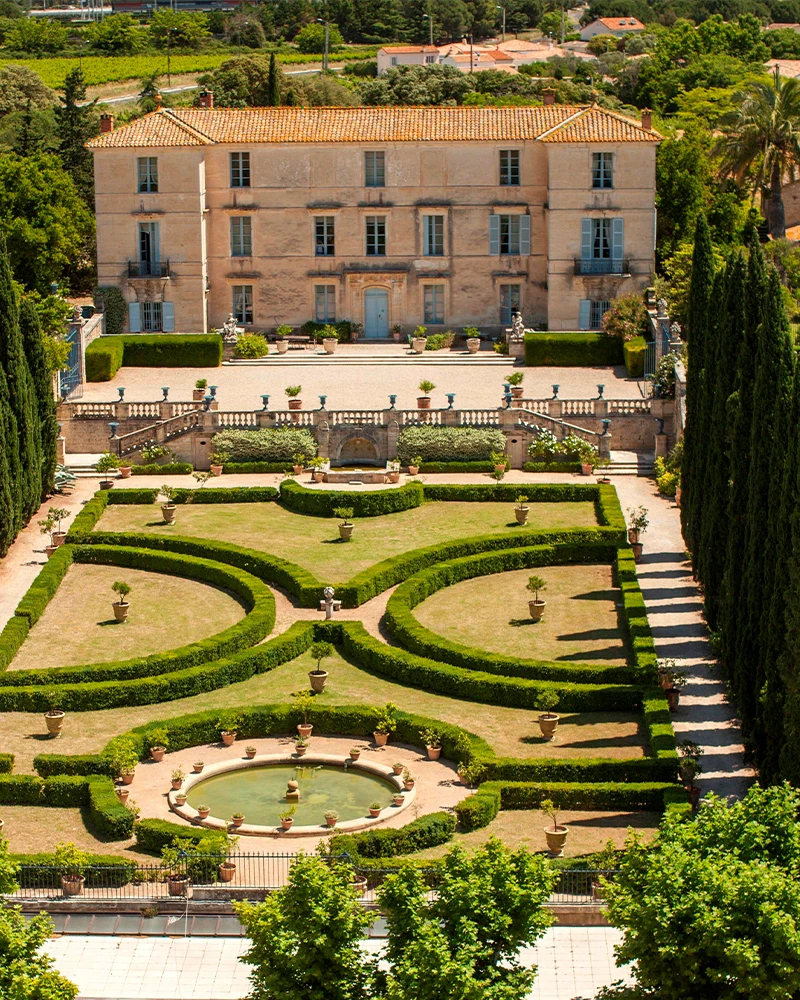
Since the 18th century, the “Folies montpellièraines” (a series of wine-growing châteaux on the outskirts of the city of Montpellier, built by the wealthy as summer residences from the 18th century onwards), as well as other historic wine châteaux surrounded by their vast vineyards, continue to reinforce the region’s rich wine-growing identity. These domaines continue as participants in the appellation, alongside more recent domaines and smaller parcels scattered in "village properties", some of which are spread over several municipalities.
At the end of the 19th century, the impressionist painters Frédéric Bazille and Gustave Courbet immortalized on canvas the hillside vineyards around Montpellier.
The town of Montpellier itself, the center of the appellation, acquired an international wine reputation, mostly thanks to the invention of the alembic still by Arnaud de Villeneuve (14th century) and his school.
It was in Montpellier that numerous scientific and agronomic advancements were achieved. Notably, the illustrious Henri Marès was recognized for establishing the sulfur treatment protocol to protect the grapevines against powdery mildew. Then, when phylloxera invaded and almost wiped out the vineyards of France, agronomic research in Montpellier discovered numerous techniques to combat this devastating insect.
Nowadays, thanks to the Agropolis center, the second largest agronomic research group in the world, Montpellier continues to exert a strong influence on agriculture, viticulture and the international food industry.
The beginning of the collective adventure of "Grés de Montpellier”
In 1993, a few winegrowers created a syndicate to promote the recognition of the Grés de Montpellier region.
(In Occitan, “grés” refers to poor and stony soils.)
They identified the potential of the terroir and the work of certain winegrowers producing at a high level of quality. Since 1997, the producers of Grés de Montpellier apply production rules pertaining to yields, grape varieties, the age of the vines, plot selection and maturation through a strict set of specifications.
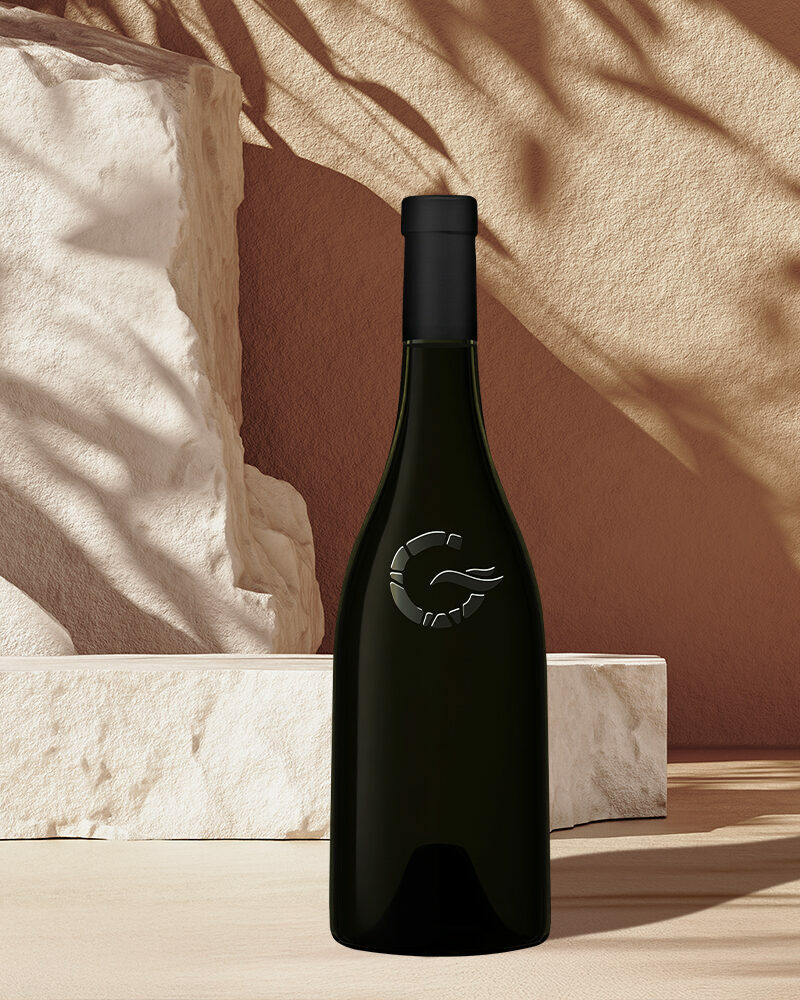
Recognized officially by decree in 2003 as the denomination of the Languedoc appellation, the winegrowers strengthened their collective visual identity with the creation of an engraved union bottle in 2011.
The winegrowers of Grés de Montpellier are strongly committed to environmentally responsible agronomic practices. More than 85% are in certified agro-environmental approach and more than 75% are in organic production or conversion to organic production.
The Creation of the Syndicate
Dénomination Languedoc
Official Syndicate Bottle
AOC Grés de Montpellier
An Identity that reflects
our terroir
The Grés de Montpellier unveil a new visual identity, conceived as a reflection of their terroir and distinctive character. More than just a logo, this new signature expresses the soul of the appellation: a natural amphitheatre of vineyards opening onto the Mediterranean and embracing the city of Montpellier; a rich tapestry of terroirs shaped by fifty shades of stone; the influence of the sea; and deep-rooted Languedoc heritage.
The “G” of Grés de Montpellier thus becomes a true emblem.
This new identity also comes to life on the official Grés de Montpellier bottle, a true collective signature of the appellation. Its embossed engraving, designed like a hallmark, serves as a seal of origin — a symbol of authenticity and quality that celebrates our terroir: a landscape, a geology and a distinctive climate.
With the support of Adelphe, the Grés de Montpellier official bottle has been lightened to reduce its environmental footprint. Its redesigned form reflects a more sustainable approach, combining elegance, commitment and recognition.
An identity that tells the story of a terroir, a bottle that bears its mark, and wines that express the full character of Grés de Montpellier.